Maintaining food hygiene is compulsory for every person that cooks. Including the recipes gave need to use healthy components.
Cuisine is something that can make a family members collect. Delicious residence food preparation menu, can make your companion and also youngsters also more caring. Although simple food preparation, house cooking made with love will certainly have a special perception.
There are many delicious dishes that can become family faves. The recipe can be the major food selection that is both appetizing and also dental filling. Right here are recipes about Kolak Ubi and Pisang (Stewed Sweet Potato and Banana in Coconut Milk), which are our picks for you to try in your home:.
Hi, I hope you are having an amazing day today. Today, I’m gonna show you how to prepare a special dish, kolak ubi and pisang (stewed sweet potato and banana in coconut milk). One of my favorites food recipes. This time, I am going to make it a little bit unique. This is gonna smell and look delicious.
Kolak Ubi and Pisang (Stewed Sweet Potato and Banana in Coconut Milk) is one of the most well liked of recent trending foods in the world. It is appreciated by millions every day. It’s easy, it’s fast, it tastes yummy. They’re nice and they look fantastic. Kolak Ubi and Pisang (Stewed Sweet Potato and Banana in Coconut Milk) is something which I have loved my whole life.
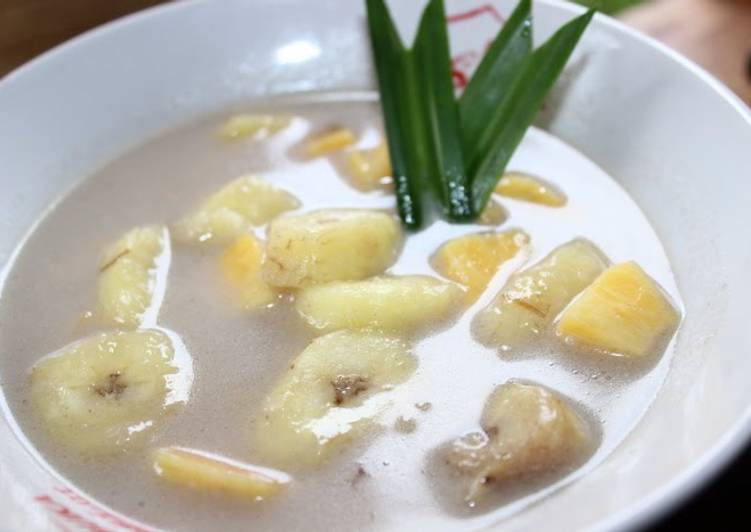
Great recipe for Kolak Ubi and Pisang (Stewed Sweet Potato and Banana in Coconut Milk). Kolak Ubi and Pisang is Indonesian common dessert which is made from banana, sweet potato, and often jackfruit. It has sweet and creamy flavor from coconut milk.
To get started with this particular recipe, we have to first prepare a few components. You can cook kolak ubi and pisang (stewed sweet potato and banana in coconut milk) using 6 ingredients and 6 steps. Here is how you cook it.
Materials for making of Kolak Ubi and Pisang (Stewed Sweet Potato and Banana in Coconut Milk):
- Make ready 4 piece Banana, cut small pieces
- Take 200 grams sweet potato
- Get 50 grams Javanese palm sugar/brown sugar
- Take 1 can coconut milk, add 2 cup of water
- Make ready 2 pandan leaves (screwpine leaf)
- Prepare pinch salt
This dish is popular during the holy month of Ramadhan. There are other ingredients that are palatable for this sweet dessert such fermented cassava, jackfruits, and snakeskin fruits. Kolak (or kolek) is an Indonesian dessert prepared with a base of palm sugar and coconut milk, flavored with pandanus leaf. One of the most popular versions includes plantain and is called kolak pisang or banana kolak.
How To Make Kolak Ubi and Pisang (Stewed Sweet Potato and Banana in Coconut Milk):
- Peel the skin of sweet potato, and cut into small cubes. Then place in a boiling pan.
- Bring to boil until the sweet potato become tender, but not too soft. Then drain the water. Set aside.
- Heat the coconut milk in a boiling pan, add palm sugar and stir until the sugar completely disolved. You can adjust the sweetness according your desire.
- Keep stiring the coconut milk to prevent from lumpiness. Then add the sweet potato and banana, bring to boil.
- Add the pandan leaf and pinch of salt, stir again. Taste the soup if its sweet enough for you.
- And done. You can serve it warm or with ice.
With its rich and intense flavors, Indonesian cuisine is one of the most colorful cuisines in the world. This diversity comes from the fact that. In Indonesia, there are desserts made with all sorts of different things that you eat with palm sugar syrup and coconut milk. This type of sweets is called Kolak. Add palm seeds, pandan leaves and palm sugar and stir until all the sugar dissolved.
Ideally the dishes above can keep your household together. Gather in an enjoyable atmosphere.
So that is going to wrap it up with this special food kolak ubi and pisang (stewed sweet potato and banana in coconut milk) recipe. Thanks so much for reading. I am sure that you will make this at home. There’s gonna be interesting food in home recipes coming up. Don’t forget to bookmark this page in your browser, and share it to your loved ones, colleague and friends. Thanks again for reading. Go on get cooking!